
A wooden executive desk with a wood tabletop brings a warm wood surface to manager and director offices, pairing a wood-panel body with a wood-look worktop and matching base. The top provides the writing and device plane, while the wood-panel body and legs define the desk's formal outline. This article describes the wood tabletop character, body and panel details, leg and base structure, office placement and guest seating, sizing against workspace proportions, finish coordination, and routine care for a wood executive desk.
The wooden executive desk
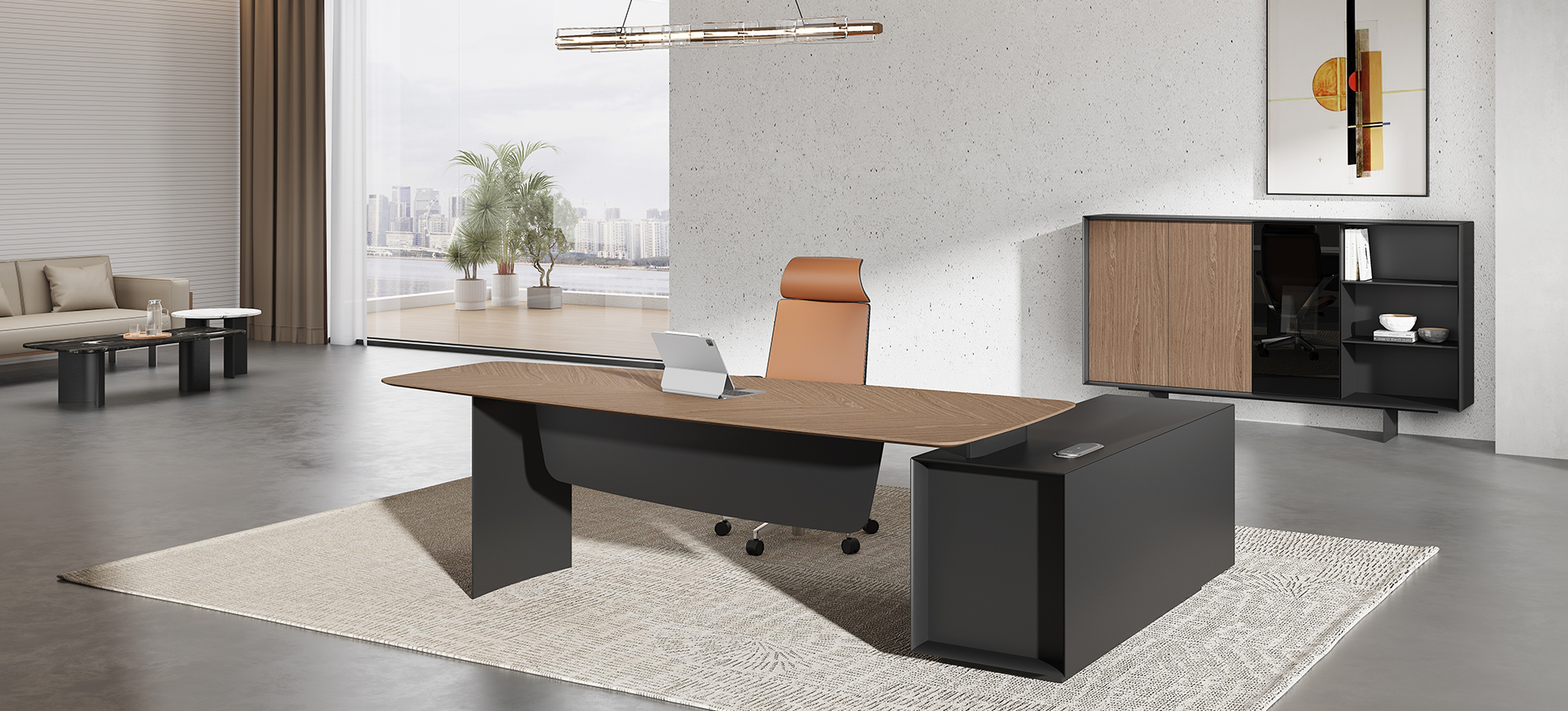
This executive desk uses a wood-look tabletop on a wood-panel body, planned for manager offices, director rooms, and formal workspaces that prefer a warm established look. The wood top forms the writing and device plane, and the matching body panels carry the desk's outline along the front and sides. The piece can sit on panel legs, straight legs, or a drawer pedestal base, leaving knee room for the seated user under the main top. It supports daily correspondence, document review, and short in-office discussions.
The desk combines work surface and visual character in one wood-toned piece. The active top holds the laptop, papers, and active materials, while the panel body frames the writing zone. Sizing, body layout, and chair clearance are checked against the clear office dimensions. The descriptions here focus on the physical desk and its wood finishes, without service arrangements, commercial terms, or provider background.
Wood tabletop character
The wood-look worktop carries a wood-grain pattern in a range of warm stains, from light oak tones to deeper walnut and brown shades. The grain runs along the top length, and the surface sits flat and even so papers, notebooks, and a laptop rest steadily side by side. The edge treatment can be straight, eased, or beveled to match the office furniture style, and the edge thickness balances the visual weight of the panel body below. Wood-grain detail varies between tops, so each piece shows its own pattern rather than an identical repeat.
Common top finishes include matte, satin, and lightly sheened surfaces, each reading differently under office lighting. A matte or satin face keeps reflection low on laptop screens, while a smoother sheen catches light along the edge. The top tone is chosen against the office walls, carpet, and nearby cabinetry, so the wood desk coordinates with the interior rather than standing apart. The material is selected for a daily office environment where the top is written on, wiped, and rearranged through the work day.
Body panels and base structure
The desk body uses wood-panel construction for the front, sides, and any drawer fronts, finished to match the top stain. Panel legs carry the top at the corners or ends, straight legs provide a lighter open outline, and a drawer pedestal combines body and storage under one side. Pulls and hardware follow a plain style consistent with the wood panel detailing, and any open shelf or modesty panel under the top uses a matching interior finish. Adjustable feet help the body sit level on carpet, keeping the top steady during use.
Structural planning focuses on knee room and a steady work surface. Leg or pedestal placement should leave enough space for the seated user to tuck the task chair in and push back, and the body should not project far beyond the top edge. Where a side credenza or return is paired, its panel finish matches the desk body so the office reads as one coordinated set. Cable features route laptop and desk-device cords away from the writing surface, keeping loose wires off the panel front. The base should visually balance the wood top, so the desk does not feel top-heavy in the room.
Office placement and guest seating
Placement of the wood desk considers the office walls, window, and entry door. The desk often sits against a wall that gives the seated person a view toward the entry, with any window off to one side rather than directly behind the screen. Plain wall paneling or simple framed decor behind the desk complements the wood body, so the desk's straight lines echo the wall treatment nearby. Guest chairs sit in front of the main desk, outside the work zone, so visitors remain in a defined meeting area rather than stepping alongside the pedestal or panel body.
Manager offices may pair the wood desk with a matching side cabinet or bookshelf on a free wall. Guest seating uses wood, fabric, or leather-look finishes that echo the desk's warm tone, and chair height aligns with the desk surface so short discussions at the writing surface stay comfortable. Sockets and cable points near the chosen wall are noted before the desk position is finalized, and circulation lets the seated person and visitors move without squeezing past a return or side cabinet. Lighting spreads evenly across the wood top, with glare considered against the chosen finish.
Sizing and proportion
Sizing the wood executive desk starts with the clear office dimensions. Measure the usable floor space, reserve room for the task chair to pull out and push back, and leave walking space to the door and any side storage. Door widths and corridor turns are checked against the desk sections before production, since the top and body must travel to the final room. The desk height matches the task chair, and the top depth leaves room for writing, a screen, and documents. A drawer pedestal or side cabinet adds depth to one side, so the overall footprint is counted together with the chair clearance.
Proportion balances wood work surface against circulation. A broad top suits a spacious manager office, while a slimmer outline fits a smaller room with more open floor. The top length follows the wall it sits against, and any return length follows adjacent free space. Wood-panel bodies read heavier than slim metal frames, so the desk size is checked against the room scale to avoid crowding the aisle. When length, depth, body layout, and chair clearance are settled against the actual room, the wood desk fits the office efficiently.
Finish coordination and routine care
Finish selection ties the wood desk to the rest of the office. The body stain matches nearby bookshelves and credenzas, the metal pulls repeat door frames and chair hardware, and the top tone works with paneling, carpet, and guest upholstery. Keeping the wood palette consistent helps the manager office read as a considered interior, with the panel body framing the warm writing surface. Plain hardware and trim stay consistent with the established desk style.
Routine care for the wood-look desk follows the chosen finish. The top is wiped with a soft cloth and a cleaner suited to the wood finish, and spills are attended to promptly before they set. Panel fronts and legs are dusted regularly, drawer runners are kept free of trapped paper or dust, and adjustable feet are checked to keep the top level on carpet. Abrasive scrubbers and harsh cleaners are kept away from the wood surface, and items on the top are lifted rather than dragged. Between tasks, loose papers and devices are cleared to leave the writing surface ready for the next work session.
Matching wood stain to nearby cabinetry
The wood stain on the desk should coordinate with nearby bookshelves, credenzas, and paneling so the manager office reads as one coordinated interior. A light oak stain pairs with pale walls and light carpet, while a deeper walnut or brown tone works with darker paneling and wood storage. The top stain matches the body panels and any drawer fronts, so the desk reads as a single piece rather than a mixed combination. Plain pulls and leg hardware repeat the room's other metal details.
Finish selection also considers how the office mixes wood and neutral materials. Where guest chairs use fabric or leather-look upholstery, the desk wood tone should sit comfortably alongside those fabrics. A side cabinet or bookcase in a matching stain extends the wood palette along a free wall. When the desk stain, body panels, and nearby storage are referenced against the actual office, the wooden executive desk fits the manager space as a composed wood-toned piece.
Desk placement against the office wall
Where the wood desk sits in the office depends on the walls, window, and entry door. A common layout places the desk against a wall that gives the seated person a view toward the entry, with any window off to one side rather than directly behind the screen. Plain wall finishes or simple framed decor behind the desk complement the wood body, so the desk's panel lines echo the wall treatment nearby. Sockets and cable points near the chosen wall are noted before the desk position is finalized, so device cords have a clear route to the grommet.
Window placement affects both light and any blind or curtain behind the work surface. Strong daylight on the writing top can reflect on a screen, so the desk is angled or positioned to reduce direct glare. The side of the desk facing the window leaves walking room, and guest seating remains in front where it does not block the light. A side cabinet or bookshelf sits on an adjacent free wall rather than beside the desk's plain face. When walls, window, and door are mapped around the wood desk, the private office has a workable, balanced layout.
Choosing chair and guest seating scale
The executive task chair pairs with the wood desk in height and scale. The chair seat aligns with the desk surface so the seated person can write and use a screen comfortably, and the chair base should leave room to roll out and push back without hitting the drawer pedestal or side panel. Chair frames can repeat the desk's wood or metal details, while plain fabric or leather-look upholstery keeps the manager office restrained. Guest seating in front of the desk uses a matching plain style, kept outside the active work zone.
Scale matters between the wood desk and chairs: a broad desk in a spacious office can pair with a full-size task chair, while a compact outline in a smaller room suits a slimmer chair profile. Guest chairs should not block the walkway to the door, and their height should allow short discussions at the desk without crowding the writing surface. Where the office pairs the desk with a side cabinet, the guest seating remains in front rather than alongside the pedestal. When task chair, guest seating, and desk proportions are settled against the office dimensions, the private workspace stays open and functional.
FAQ
Q: What is a wooden executive desk?
A: It pairs a wood-look tabletop with a wood-panel body and matching base, planned for manager and director offices that prefer a warm established look.
Q: Which wood tones and finishes are typical?
A: Light oak to deeper walnut and brown stains are common, in matte, satin, or lightly sheened surfaces; grain detail varies between tops rather than repeating as an identical pattern.
Q: Which body and leg styles are offered?
A: Panel legs, straight legs, or a drawer pedestal base carry the top, with matching panel fronts, plain pulls, and an optional modesty panel or open shelf under the writing area.
Q: How is the desk sized for an office?
A: Measure clear floor space, reserve chair pull-out and walking room, check door and corridor access, match the height to the task chair, and count any pedestal or return depth together with chair clearance.
Q: How is a wood-look desk maintained?
A: Wipe the top with a cleaner suited to the wood finish, blot spills promptly, dust panels and legs, keep drawer runners clear, check feet for level, and avoid abrasive pads, harsh cleaners, or dragging items across the top.