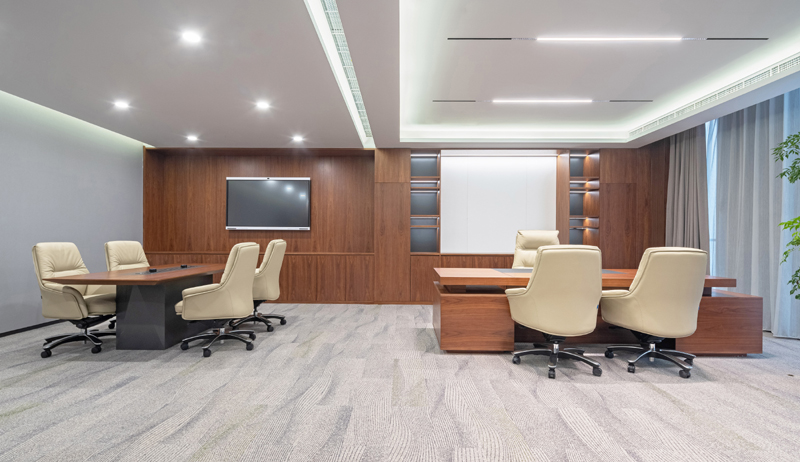

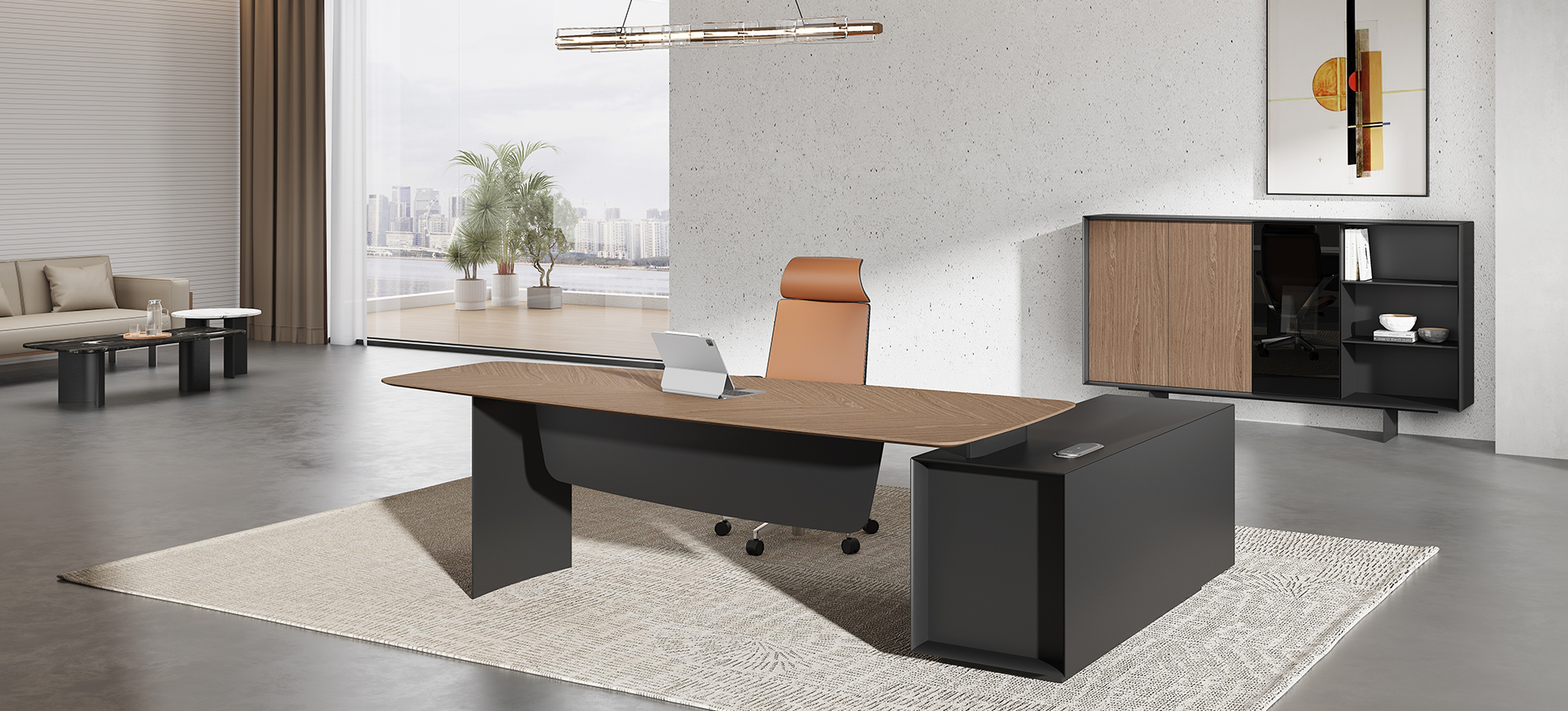
A round sintered stone conference table with a central leg base brings a circular work surface to meeting rooms built around equal-face discussion. The central pedestal frees the perimeter for chair pull-out, while the stone top provides an even plane for notebooks and devices. This article describes the circular outline, stone top character, central pedestal structure, seating around the circle, room placement and circulation, sizing for group discussions, finish coordination, and routine care for a round discussion table.
The round table with central base
This conference table uses a circular sintered stone top carried on a central leg base or pedestal, suited to meeting rooms built around face-to-face discussion. The central support frees the whole perimeter for chairs to pull in and out, since no corner or side legs interrupt the seating ring. The stone top provides an even working plane for notebooks, laptops, and shared documents, and the round outline gives every place a similar angle toward the center of the group. The piece suits collaborative discussions, team reviews, and small-to-medium working sessions.
Because the support sits under the center rather than around the edge, the floor space around the table stays open, and guests can enter the seating ring from any side. The table's size, pedestal width, and surrounding circulation are checked against the clear room dimensions. The descriptions here focus on the physical product and how it fits a discussion room, without service arrangements, commercial terms, or provider background.
Circular stone top
The round top uses a sintered stone slab cut to a circular outline and finished along the curved edge. Common tones include white, light gray, dark gray, and beige, with matte or honed finishes that limit reflection under ceiling lights. The curved edge can be eased or rounded to soften the perimeter, reducing sharp corners along the seating ring. Natural variation in the stone means the pattern on each circular top is its own rather than an identical printed surface.
The flat circular surface places every attendee around a shared center, so notes and devices sit steady side by side around the ring. The slab is checked for level before it is fitted to the central pedestal, and the edge treatment frames the circle under room lighting. Color selection follows the room's largest finishes, such as wall panels and carpet, so the round top coordinates with the interior. The stone material is chosen for a shared discussion environment where the surface is wiped clear between sessions.
Central pedestal structure
The central leg base carries the round top from a single column, a flared pedestal, or a multi-leg cluster joined at the center. A single column frees the entire perimeter for chair movement, while a flared base spreads support across the floor and leaves open knee room on every side. The base can be powder-coated metal in black, gray, or a neutral tone, or a mixed steel-and-wood pedestal that matches nearby cabinetry. Adjustable feet help the pedestal sit flat on carpet or slightly uneven flooring, keeping the round top level during use.
Structural planning balances the round top over the central support. The pedestal should carry the slab without rocking, and its footprint should not project far enough inward to crowd seated knees. Where devices are used, a grommet near the center or along the under-top channel routes cords down to the pedestal base. The base should visually balance the stone top, so the table does not feel top-heavy in the room. Chair clearance around the full circle is measured so guests can slide in and out on every side.
Seating around the circle
Seating around a round table follows the perimeter in an even ring, with each place facing the center. The number of seats is set by the circumference: each place needs room for notes and a device, with a small gap between chairs for elbow room. Because there is no fixed head of the table in a pure round layout, the arrangement works well for equal-face discussions and collaborative sessions. Guest chairs align with the curve, and space behind the ring allows people to stand or step out during a discussion.
Round tables often pair with plain guest or task chairs that repeat the base finish. Chair height aligns with the table surface so attendees can write and use devices comfortably. In rooms that also host presentations, a screen may sit on one wall outside the seating ring, and seats near that wall can turn toward the screen when needed. Side storage stays on a free wall rather than around the pedestal. When seating count, ring spacing, and circulation are planned together, the round table supports an open discussion layout.
Room placement and circulation
Placement of a round table considers the available floor area and the entry route. The circle should leave walking room on every side, so people can reach any seat without crossing in front of another attendee. In rooms with doors that swing inward, the table position should keep the door opening clear, and in rooms beside workstations, the seating ring should not block the main office aisle. Sightlines to any screen, whiteboard, or wallboard are checked from the ring, and lighting above the center spreads evenly across the whole circle.
Round outlines soften a room with square furniture and straight wall lines. The central pedestal keeps the floor visible around the ring, which helps a discussion room feel open even when several chairs are occupied. Any spare chairs keep against a side wall rather than outside the ring when not needed. The table position also accounts for window light direction, so daylight does not reflect strongly off the top into seated faces. When placement, circulation, and light are mapped together, the round table fits the discussion space as an organized central piece.
Sizing, finish coordination, and care
Sizing the round table starts with the clear room dimensions. Measure the usable floor area, reserve chair space around the full circumference, and leave open walking room between the ring and the walls. Door widths and corridor turns are checked before production, since the round top and pedestal must travel to the final room. The top diameter sets how many places fit around the ring, and the height matches the planned seating. A smaller diameter suits a huddle or private discussion room, while a larger circle accommodates a medium working group.
Finish selection ties the pedestal to the rest of the interior. The base metal or wood tone can match door frames, window frames, chair legs, and nearby storage, while the stone top tone works with carpet, paneling, and upholstery. Keeping the palette limited helps the room read as one coordinated set. Routine care follows the plain design: wipe the stone with a soft cloth and mild stone-safe cleaner, blot spills promptly, dust the pedestal, check feet for level, and keep abrasive scrubbers away from the stone finish.
Matching pedestal finish to the room
The central pedestal finish should coordinate with the meeting room's other furniture and hardware. A powder-coated black or gray metal column matches door frames, window frames, and chair legs, while a wood-look pedestal repeats nearby credenza and bookshelf tones. Keeping the pedestal tone consistent with these elements helps the round table read as part of the interior rather than a separate central object. Plain trim and a simple column profile keep the modern discussion look uncluttered.
Finish selection also considers the stone top tone above the pedestal. A neutral stone gray or beige works with both dark metal and warm wood bases, so the two parts read as one balanced piece. Where guest chairs use a matching frame finish, the seating ring echoes the pedestal around the perimeter. When the base, top, and nearby finishes are referenced against the actual room, the round table fits the discussion space as a coordinated central piece.
Lighting around a round discussion table
Lighting for a round table spreads evenly across the circular top so attendees can read notes and screens from every seat around the ring. A matte stone finish helps reduce reflection on laptop displays, while a smoother honed surface catches more overhead light and may call for a softer fixture angle. Window light direction is considered, since daylight entering a discussion room can reflect across the round top differently than a rectangular one. The table position can be adjusted so glare does not fall directly on the seated faces or the writing surface.
In a discussion room, the light source should not crowd the central pedestal visually. A plain overhead fixture or spread of recessed panels keeps the room feeling open, and the neutral stone tone works with the lighting to keep the discussion zone bright rather than shadowed. Any task lamp or portable light sits to one side of the top rather than across the writing area. When lighting, window direction, and table position are arranged together, the round table provides even, readable light for face-to-face sessions.
Cable and device placement on the round top
Where laptops and meeting devices are used on a round table, cable placement is planned around the central pedestal. A grommet near the center or along the under-top channel routes cords down to the pedestal base, and an under-table tray gathers leads toward the nearest power point. The number and position of grommets follow how the room is used, whether for a small discussion group or a connected working session. Keeping cables routed through the pedestal prevents loose wires from showing between the chairs around the ring.
Device placement also affects seating around the circle. A shared display or video screen sits on a wall outside the seating ring, and table positions near that wall are arranged for participants who share materials. Power and connection points near the table are mapped so cords reach their devices without stretching across the floor. The central pedestal leaves enough open space underneath for cable routing without blocking knee room on any side. When grommets, channel, and device positions are planned together, the round table supports connected discussions while keeping the underside tidy.
FAQ
Q: What is a round sintered stone conference table?
A: It has a circular sintered stone top carried on a central leg base or pedestal, suited to face-to-face discussion where every seat angles toward the group center.
Q: Why use a central pedestal?
A: The central support frees the whole perimeter for chair pull-out, keeps the floor open around the ring, and leaves knee room on every side without side legs interrupting the seating.
Q: How many seats fit around a round table?
A: The number follows the diameter; each place needs room for notes and a device with a small gap between chairs, and the circumference is counted by places rather than overall diameter alone.
Q: How is a round table placed in a room?
A: Reserve walking room on every side, keep the door opening clear, avoid blocking workstation aisles, check sightlines to any screen or whiteboard, and account for window light direction.
Q: How is a round stone table maintained?
A: Wipe the stone with a stone-safe cleaner and soft cloth, blot spills promptly, dust the pedestal, check feet for level, and avoid abrasive pads or dragging chairs along the curved edge.