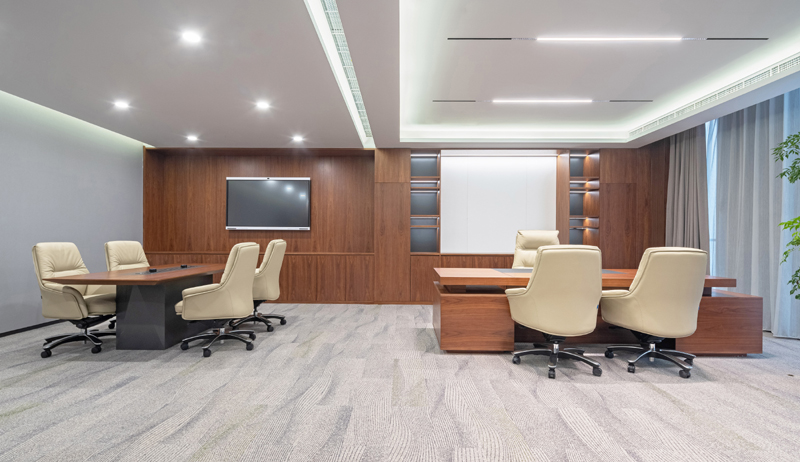

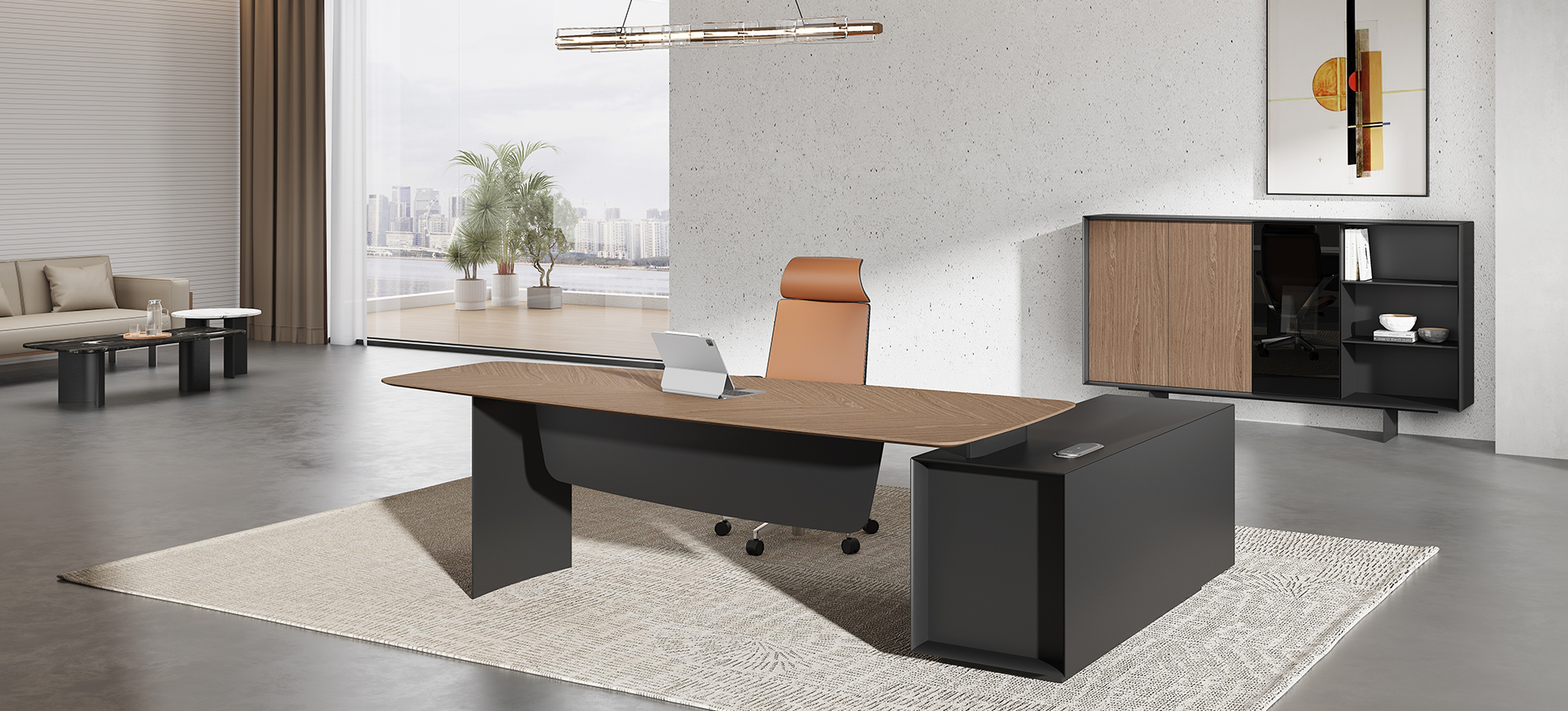
As an important component of modern office environment, large conference tables not only carry corporate culture and image, but also play an important role in conference communication. Therefore, the selection of materials and processes directly affects the effectiveness and lifespan of the conference table, and even affects the atmosphere of the conference and the experience of participants. This article will conduct in-depth research on the material selection and process of large conference tables.
1、 Material selection
Large conference tables typically use a variety of materials, the most common of which include wood, metal, and glass.
1. Wood
Wood is favored for its natural beauty, warmth, and excellent sound absorption properties. Common woods include walnut, oak, and cherry wood. Among them, walnut wood is often used in the manufacturing of high-end conference tables due to its unique texture and deep color. Oak, with its durability and wear resistance, has become a popular choice for business conference tables. In addition, the environmental friendliness of wood also conforms to the trend of "green office" in modern office publishing.
2. Metal
Metal materials such as stainless steel and aluminum alloy are suitable for use as brackets or frames for conference tables due to their high strength, corrosion resistance, and ease of cleaning. The surface glossiness of stainless steel is high, which can enhance the overall modernity; Aluminum alloy, on the other hand, is suitable for making movable conference tables due to its lightweight design.
3. Glass
Glass, as a desktop material, has gradually become popular in recent years. Its transparency is high, which can visually increase the sense of space. Especially tempered glass, it is not only beautiful but also safe. However, glass tabletops are prone to leaving fingerprints and water stains, so regular maintenance is necessary to ensure their beauty.
2、 Process research
The production of large conference tables not only depends on the selection of materials, but advanced technology is also indispensable.
1. Processing technology
The cutting, polishing, and bonding processes of wood determine the structural stability and aesthetic appearance of conference tables. High precision CNC machining technology enables various components to be perfectly combined, reducing errors caused by human factors. In addition, the use of modern splicing and connection techniques such as mortise and tenon technology, metal connectors, etc. not only enhances the stability of the table, but also extends its service life.
2. Surface treatment
Surface treatment processes include painting, film application, and waxing to enhance wear resistance, stain resistance, and aesthetics. For example, wooden conference tables are usually coated with environmentally friendly paint on the surface to form a protective layer, avoiding damage caused by moisture and scratches. At the same time, the glass surface will be treated with frosted technology, which can achieve a beautiful effect and reduce reflection to a certain extent, improving the comfort of use.
3. Functional design
With the development of technology, the functional design of large conference tables is becoming increasingly diverse. Many conference tables are equipped with intelligent devices such as power sockets, USB ports, and sound systems to meet the diverse needs of modern conferences. These features not only enhance convenience, but also make the meeting process more efficient.
Conclusion
The research on materials and processes for large conference tables is of great significance for improving the quality of office environments. By analyzing the characteristics of different materials and applying modern processing techniques, practical and aesthetically pleasing desktop solutions can be provided for enterprises. In short, in-depth research and understanding of the materials and processes of conference tables will bring more possibilities and innovations to future office design.