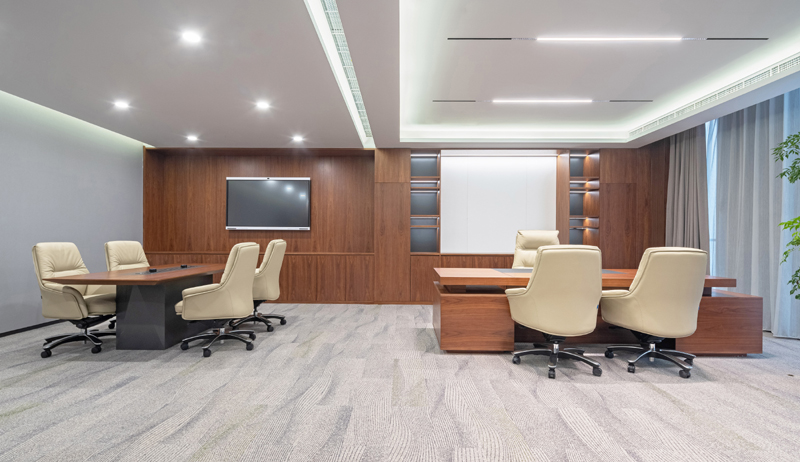

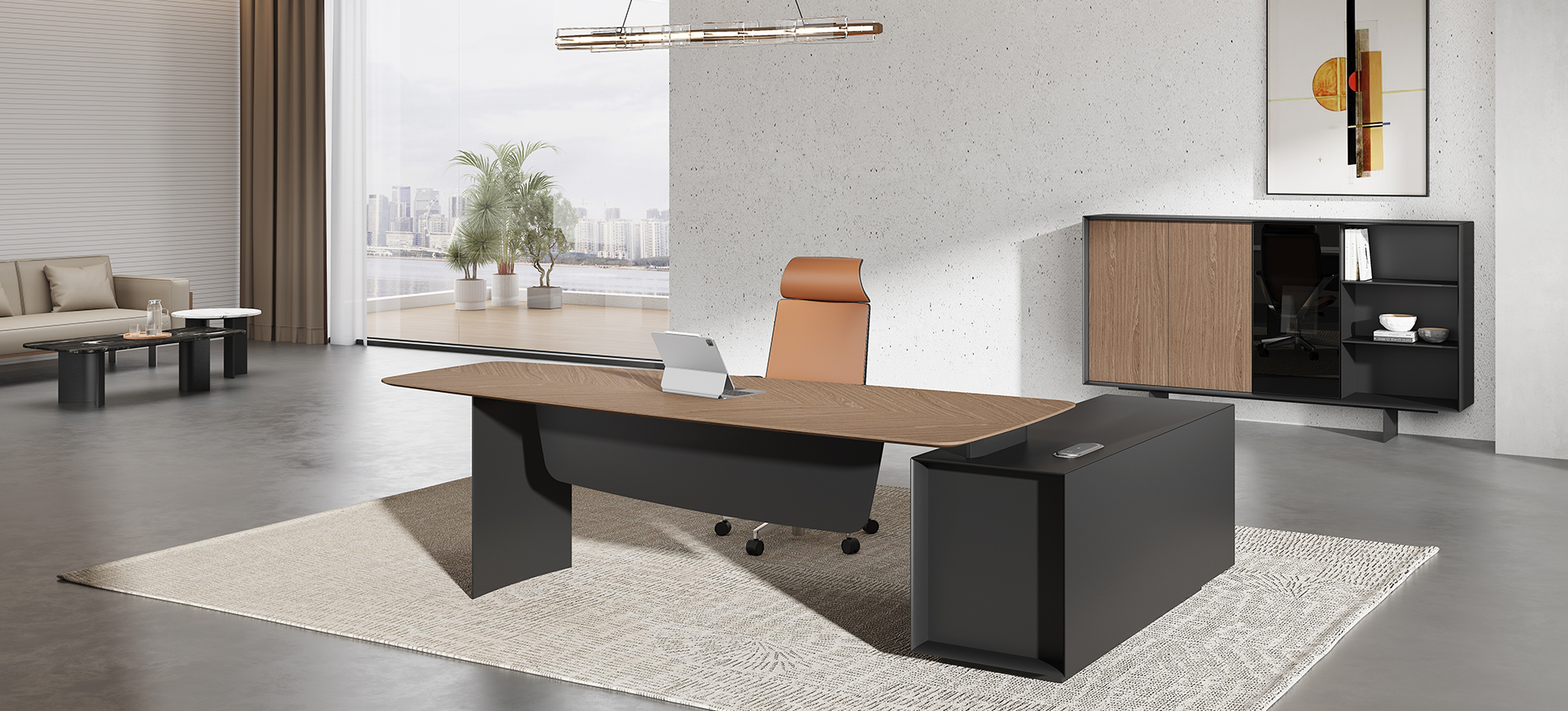
An office executive desk with a wooden tabletop and metal frame combines a wood work surface with a steel support structure, designed for manager and director offices that need a broad, organized workspace. The wood top provides a warm writing and working surface, while the metal frame gives a stable, linear silhouette. This article describes the desk's work surface, frame and leg design, storage pairing, room fit and sizing, styling coordination, and the everyday details that matter when choosing an executive desk for a private office.
The wooden work surface
The main surface of this executive desk is a wooden tabletop chosen for a private office workspace. The wood surface offers a warm tone that pairs with office cabinetry, wall finishes, and guest seating. It provides a flat, even area for a laptop, notebooks, documents, and daily working materials. Wood tops come in a range of tones, from light oak-like finishes to deeper walnut-like shades, allowing the desk to match the room's existing interior palette. The surface is finished to a smooth feel, suitable for writing and arranging papers through a regular workday.
Beyond the writing area, the wooden top sets the visual tone of the desk. Its grain and color can echo nearby bookshelves, credenzas, or door frames, tying the furniture together in the office. The top edge is finished cleanly, and the underside sits on the metal frame with even support across the span. When planning a desk, the top depth is considered alongside chair clearance and leg room, since a usable work surface needs to balance writing space with comfortable seating position.
Metal frame and leg design
The support structure under the wood top is a metal frame, usually steel, arranged in straight legs or a side-frame design. Steel legs give the desk a linear, modern look and keep the space under the top open for knee room. Side frames run along the two sides, while end legs sit near the corners. The frame can be powder-coated in black, gray, or a metal tone that coordinates with the room's door hardware, window frames, and light fixtures. The metal structure balances the warmth of the wood top, creating a mixed-material desk that reads as structured but not heavy.
Stability is the main structural concern for an executive desk. The frame should hold the top level without movement, and each foot should sit flat on the floor, with adjustable feet available for carpet or slightly uneven surfaces. Leg spacing should leave clear knee room and allow the chair to slide in and out without catching the frame. Where a desk pairs with a return side table, the frame connection between the desk and return should sit flush and steady. The chosen frame style should match the visual weight of the wood top so the desk feels balanced in the room.
Storage and paired pieces
An executive desk often works alongside storage pieces such as drawer pedestals, side credenzas, or low bookcases. Drawer pedestals can sit under one side of the desk, holding stationery, files, and daily supplies. A side credenza placed against a free wall stores larger items and displays documents or decor on top. Some desks add a hutch or open shelf above the work surface for books and reference materials. These pieces extend the desk's function without crowding the work area itself.
When planning storage, consider what the office uses day to day: files, stationery, reference books, and any devices or cables kept at the desk. Drawer placement should be reachable from the seated position, and open shelves should stay within easy arm's length. The storage finish can match the desk's wood tone or metal frame so the office reads as one coordinated set. Cable routing for the laptop and any desk devices can use grommets in the top and channels along the frame, keeping the work surface clear of loose wires.
Room fit and sizing
Fitting an executive desk into a private office starts with the room's clear dimensions. The desk should leave walking space on at least one side for entry and exit, and enough room behind the desk for the chair to pull out fully. If the office includes a guest chair or two, space should be reserved in front of the desk without blocking the door. Window placement, wall panels, and any side storage should be mapped before the desk size is finalized, so the main work surface sits in a usable position.
Desk sizing also matches the chair used in the office. The desk height should align with the task chair, and the top depth should leave room for both writing and a screen. Large offices may fit an oversized desk with a broad top, while smaller rooms work with a compact executive model. Door widths and the route into the office should be checked for a desk of the planned size. A well-sized desk leaves the office open for movement while giving the seated person a comfortable, organized work area.
Styling and interior coordination
The mixed wood-and-metal look of this executive desk suits a range of interior styles. In a modern office, the clean metal frame pairs with simple task chairs and neutral wall colors. In a warmer interior, the wood top complements wood paneling and fabric guest seating. The desk can be coordinated with nearby credenzas, bookshelves, and window frames so materials repeat across the room rather than clash. Neutral wood tones and metal finishes tend to remain usable over time, which matters for an office that may host different visitors.
Color decisions usually follow the largest surfaces in the room: wall paint, carpet, and upholstery. A light wood top brightens a pale room, while a deeper wood tone grounds a space with darker finishes. The metal frame can echo the room's hardware, such as door handles and lamp bases. The goal is an office where the desk sits as the central working piece, supported by coordinated storage and seating, without competing with the room's overall finishes.
Everyday use and care
Routine care for the desk keeps both the wood top and metal frame in good condition. Wipe the wood surface with a soft cloth and a suitable wood-safe cleaner, and attend to spills before they sit. Avoid abrasive scrubbers on the finish, and take care when moving items across the top. Dust the metal frame and legs regularly, and check adjustable feet now and then to keep the desk level on carpet. Chair placement should leave enough clearance so chair legs do not knock against the desk frame.
Daily use also benefits from keeping the work surface organized: cables routed through grommets, stationery stored in drawers, and papers kept in trays or files. This protects the top and keeps the desk ready for work each morning. Configuration choices, including top tone, frame finish, drawer or return options, and any cable features, are settled based on the room size and the office's daily workflow. The finished desk should support regular work while fitting naturally into the private office interior.
Setting Up the Executive Workstation
Building a workstation around this desk starts with the main work surface. Place the laptop or writing materials in the center of the top, keep a task lamp to one side where it does not cast glare across the screen, and store stationery in the nearest drawer. Side space on the top can hold a document tray or reference folder, while any printer or secondary device sits on a return or side table if one is added. Keeping the center of the desk reserved for active work makes the daily routine smoother and leaves the wood top looking uncluttered.
Ergonomic fit at the desk depends on matching the chair to the desk height. The user's feet should sit flat, elbows rest near desk level, and there should be enough knee room under the top for comfortable sitting. The metal frame should not interfere with chair movement, and any drawer pedestal should pull out without bumping the chair base. Cables from the laptop, lamp, and any peripherals can be routed through top grommets and gathered under the frame, keeping loose wires off the work surface and the floor around the desk.
Beyond the desk itself, the office layout places guest seating in front for short conversations, with walking space kept open along the sides. A credenza or bookcase can sit on a free wall, storing larger files and displaying reference items. The desk's wood tone can echo these storage pieces, while the metal frame repeats the finishes used on door handles and light fixtures. A well-set-up executive workstation combines a usable work surface, reachable storage, and a clear room layout around the desk.
Daily Workflow at the Desk
Once the desk is in place, the daily workflow at the workstation is arranged around the main work surface. The laptop or active documents go in the center, a task lamp sits to one side, and stationery and small supplies stay in the nearest drawer. A document tray or reference folder can occupy one side of the top, while a secondary device or printer moves to a return or side table if one is part of the setup. Keeping the center of the wood top reserved for active work keeps the desk clear and makes routine tasks easier to move through.
Comfort and access are checked after placement. The task chair should align with the desk height, with feet flat and elbows near surface level, and the metal frame should not catch the chair base or legs. Cables from the laptop and accessories are routed through grommets and gathered under the frame, so loose wires do not cross the work surface or the floor. Nearby storage, such as a credenza or bookcase, holds larger files and reference items within walking reach of the desk. When the work surface, storage, and seating are arranged this way, the executive desk supports an organized private office routine.
FAQ
Q: What is a wood top metal frame executive desk?
A: It is an office desk with a wooden work surface supported by a steel frame, combining a warm wood tone with a structured metal silhouette for manager or director offices.
Q: What storage pieces pair with this desk?
A: Drawer pedestals, side credenzas, low bookcases, and optional hutches can be paired with the desk, chosen to hold files, stationery, and reference materials within reach of the seated position.
Q: How should desk size be planned for a private office?
A: Measure the clear room dimensions, reserve space for chair pull-out and walking, match desk height to the task chair, and check door and corridor widths before finalizing the desk size.