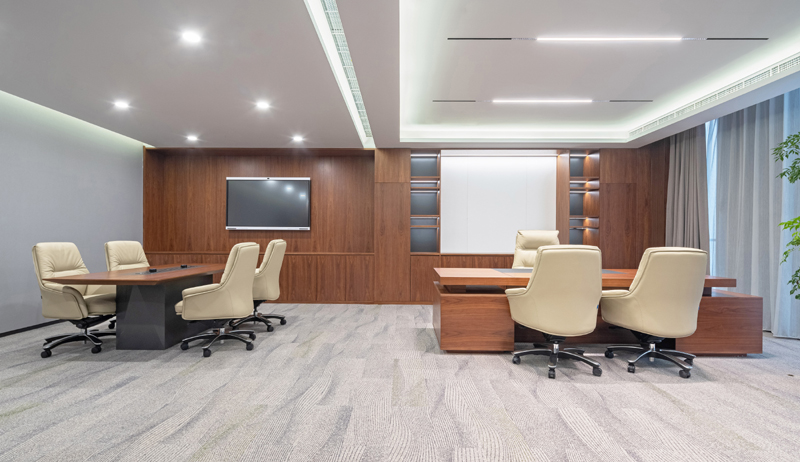

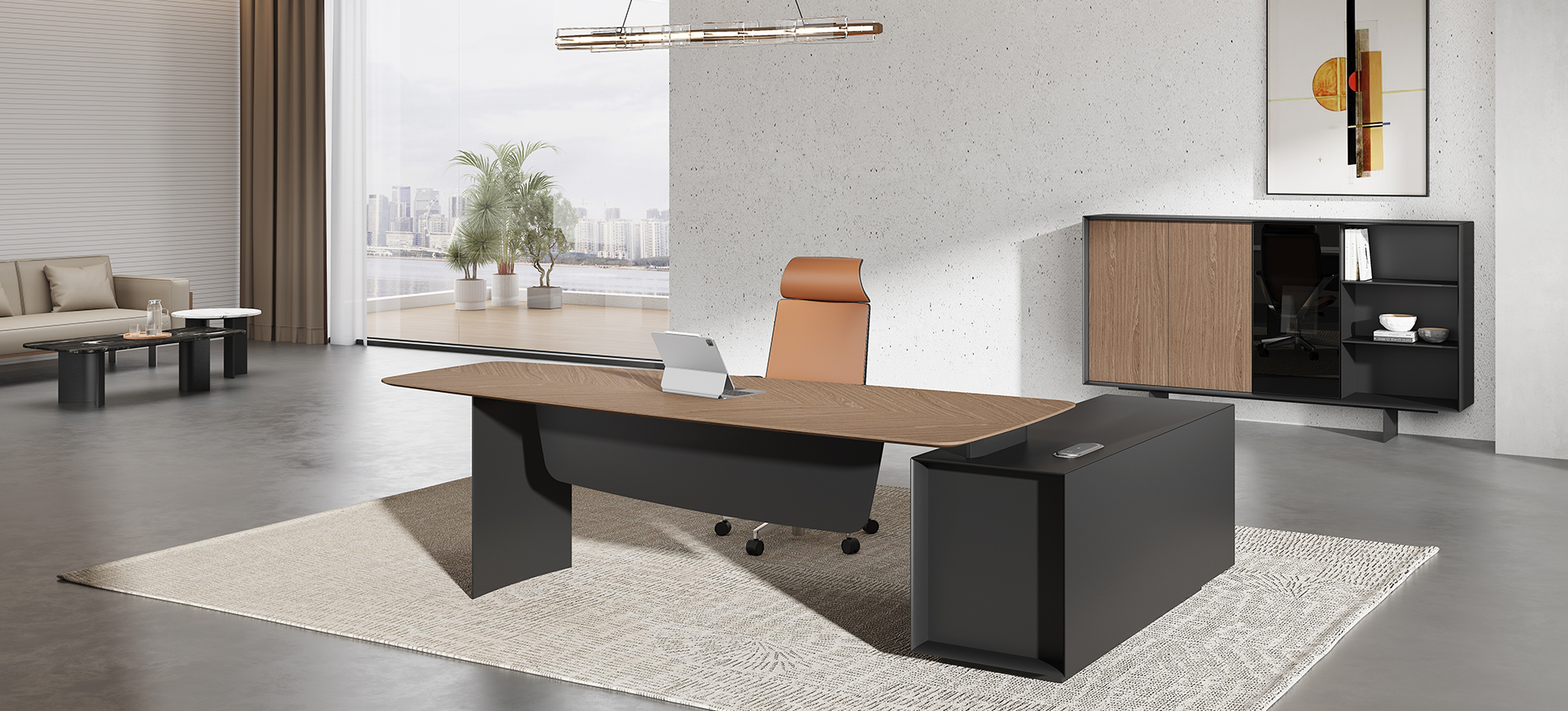
A modern sintered stone conference table pairs a plain stone tabletop with a clean support frame for office boardrooms, meeting rooms, and formal internal reviews. The stone slab forms an even work plane for notebooks, laptops, and shared documents, while the modern outline keeps the room looking organized and open. This article describes the modern design character, stone top options, frame structure, boardroom seating and arrangement, sizing against room proportions, finish coordination, and routine care points for a stone conference table used on a regular office schedule.
The modern stone conference table
This conference table is built around a sintered stone tabletop and a plain leg frame suited to modern office boardrooms and meeting rooms. The stone slab provides the flat working plane where attendees place notes, devices, and shared documents, and the clean frame underneath carries the top across its planned span while leaving open knee room and chair clearance along the sides. The piece suits internal reviews, team discussions, and short outside visits through the work week, with a neutral outline that reads well in contemporary interiors.
The table acts as the central anchor of the boardroom. Guest chairs line the long sides, the top holds active work materials, and the space beneath stays open for seating and movement. Sizing, leg spacing, and walk-around space are checked against the expected number of attendees and the clear room dimensions. The descriptions here focus on the physical product and how it fits a room, without service arrangements, commercial terms, or provider background.
Sintered stone tabletop character
The tabletop uses a sintered stone slab cut to the planned conference table size and finished along the edges. Common tones include white, light gray, dark gray, and beige, along with stone-look patterns that stay neutral against wall paint, carpet, and upholstery. Some slabs carry a matte finish that limits reflection under ceiling lights, while others have a smoother honed surface that catches light along the edge. Natural variation in the stone means each top shows its own subtle pattern rather than an identical printed surface.
Up close, the stone surface sits flat and even, which matters when notebooks, keyboards, and cups are placed side by side during a meeting. The slab is edged and checked for a level surface before it is fitted to the frame. Color selection usually follows the room's largest finishes, such as wall panels and carpet, so the tabletop coordinates with the interior rather than standing apart. The stone material is chosen for an office environment where the surface is touched, wiped, and rearranged through repeated meetings.
Modern frame and support
The frame is built from metal legs, panel legs, or a mixed steel-and-wood support that carries the stone top across its length. Leg styles include straight tubular legs, panel legs, and trestle-style end supports, each spaced to preserve knee room along the sides and chair pull-out space at the ends. The metal can be powder-coated in black, gray, or a neutral metal tone to coordinate with door frames, window frames, and light fixtures already in the room. Adjustable feet help the frame sit flat on carpet or slightly uneven flooring, keeping the top level during use.
Structural planning focuses on steady support and an open under-table area. The frame should carry the stone top without movement, and leg placement should leave enough space for seated attendees to tuck chairs in and push back. Where laptops and displays are used, grommets in the top and channels under the frame keep cables gathered. The frame should visually balance the weight of the stone top, so the table does not feel top-heavy in the room. Metal details can echo the chair frames and hardware used elsewhere in the meeting space.
Boardroom seating and arrangement
In a boardroom layout, the table sets the direction of the whole space. Chairs align along the long sides, a presentation screen or whiteboard usually sits at one end, and any side storage stays on a free wall. The frame should leave clear knee room under the top and enough space behind the chairs for people to stand or step out during a discussion. Aisles from the entry door to each seat should remain open, so attendees can reach their places without crossing in front of the group.
Regular office boardrooms mix internal teams and occasional outside visitors, so the table's neutral appearance helps it adapt to each setting. The stone top works with a range of chair styles, from mesh-back task chairs to fabric guest chairs, and the frame finish can repeat the room's existing hardware tone. Lighting above the table should spread evenly across the full top, with glare considered against the chosen finish. When the table, seating, and room finishes share a consistent palette, the boardroom reads as a planned space.
Sizing against boardroom proportions
Planning the table starts with the clear dimensions of the boardroom. Measure the usable length and width, then reserve aisle space along each side for chairs and walking, plus open space at both ends for access. Door widths and corridor turns should be checked before the table is produced, since the top and frame must travel to the final room. The tabletop depth affects how much writing and device space each attendee has, and the overall height should match the seating used in the room. Shape options for this style are most often rectangular, with oval and rounded versions available for rooms that prefer a softer outline.
Proportion balances seating capacity against circulation. A longer top carries more places along the sides, while the depth sets the writing and device plane per seat. The chosen outline should leave enough floor around the table for people to stand, move chairs, and reach the entry without crowding. When length, depth, leg spacing, and access route are settled against the actual room, the modern stone table fits the boardroom without blocking walkways.
Finish coordination and routine care
Finish selection ties the table to the rest of the interior. The frame metal can match the door frames, window frames, and light fixtures in the room, while the stone top tone works with carpet, wall panels, and upholstery. Chair frames and nearby storage can repeat the same metal and stone palette, so the boardroom reads as one coordinated set. Keeping the finish palette limited helps the space stay composed over time, even as individual chairs or storage pieces are replaced.
Routine care for the stone table follows a plain schedule. The top is wiped with a soft cloth and a mild stone-safe cleaner, and spills are blotted promptly before they set. The frame and legs are dusted regularly, adjustable feet are checked to keep the top level on carpet, and abrasive scrubbers are kept away from the stone finish. Items on the top are lifted rather than dragged, and loose papers and devices are cleared between sessions to leave the surface ready for the next meeting.
Surface finish and light reflection
The finish on the stone top affects how the boardroom reads under overhead lighting. A matte surface spreads light softly across the slab, which keeps laptop screens and paper notes from catching a bright reflection, while a honed or smoother face carries a subtler sheen along the edge and may show more of the stone pattern. The chosen finish should be considered together with the ceiling fixture layout, since a strong direct light over a smooth top can create glare that shifts as the day changes. The edge profile, straight or eased, receives the same finish treatment as the main face so the perimeter reads consistently.
Reflection also depends on the room's surrounding tones. A light stone top in a pale room reflects more ambient light than a dark top in a similarly light space, and a darker stone tone absorbs more of the overhead light. Where the boardroom uses screen presentations, the matte finish tends to keep the writing plane readable from each seat. The surface is checked for an even flat plane before fitting, so notebooks, keyboards, and cups rest steadily without rocking. These finish choices are described as product characteristics, without claims about performance under specific lighting conditions.
Coordination with seating and nearby storage
The stone top and plain frame coordinate with the guest chairs and any storage in the boardroom. Chair frames can repeat the metal tone of the legs, while upholstery picks up a neutral tone from the stone palette, such as gray, beige, or dark fabric that sits quietly against the walls. A side credenza or storage cabinet on a free wall can echo the frame finish, so the meeting group and the storage pieces read as one coordinated set rather than separate purchases. Keeping the palette limited helps the room stay composed as individual chairs or accessories are replaced over time.
Nearby storage should hold supplies, spare pads, and presentation materials without crowding the tabletop. The plain outline of the stone table pairs with both plain fabric guest chairs and wood-frame seating, depending on the rest of the interior. Where the boardroom also displays simple framed decor or a plain wall feature, the neutral stone tone leaves room for those elements to stand without competing. The table, seating, and storage are arranged together so the walkways and sightlines remain clear through each meeting session.
Surface sealing and daily wiping routine
The stone top carries a sealed finish across the face and edges, so light spills sit on the surface rather than soaking through. Water from cups, coffee, and other light spills are blotted promptly with a soft cloth, and the face is wiped afterward with a mild stone-safe cleaner. The sealing treatment does not mean liquids can sit for long periods unattended; regular prompt wiping keeps the top even over time. Open seams around grommets and joints are fitted flush so spills do not collect in gaps.
Daily wiping follows a plain routine between meetings. The top is cleared of papers and devices, wiped with a soft cloth, and checked for any marks that need a gentle cleaner. The frame and legs are dusted in the same pass, and adjustable feet are checked if the top feels uneven on carpet. Abrasive scrubbers and harsh cleaners are kept away from the stone finish, and items are lifted rather than dragged across the surface. These care steps describe routine upkeep of the physical product, without service arrangements or maintenance commitments.
FAQ
Q: What is a modern sintered stone conference table?
A: It pairs a sintered stone tabletop with a plain leg frame for office boardrooms and meeting rooms, providing an even work surface and a clean modern outline.
Q: Which stone tones and finishes are typical?
A: White, light gray, dark gray, and beige stone-look tones are common, with matte or honed surface options; natural veining and speckle vary from slab to slab.
Q: Which frame styles carry the stone top?
A: Straight tubular metal legs, panel legs, and trestle-style end supports are common, finished in black, gray, or a neutral metal tone to match the room's hardware.
Q: How is the table sized for a boardroom?
A: Measure clear floor space, reserve chair and aisle room along each side, leave open access at both ends, check door and corridor access, and match the height to the planned seating.
Q: How is a modern stone conference table maintained?
A: Wipe the top with a stone-safe cleaner and soft cloth, blot spills promptly, dust the frame, check feet for level, and avoid abrasive pads or dragging chairs along the edge.