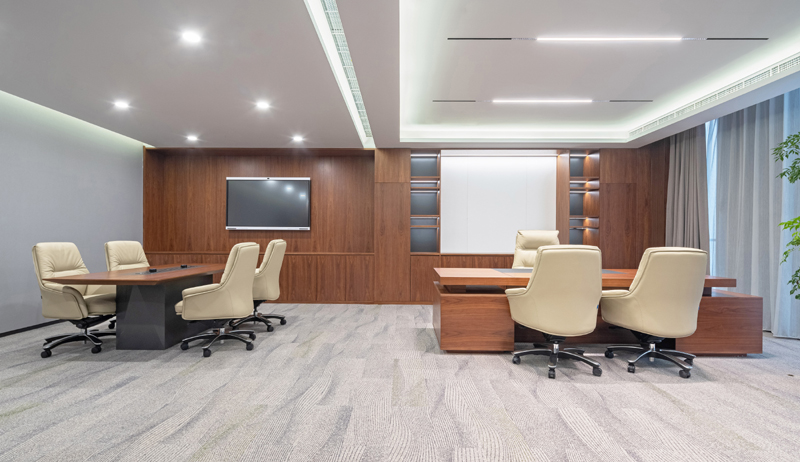

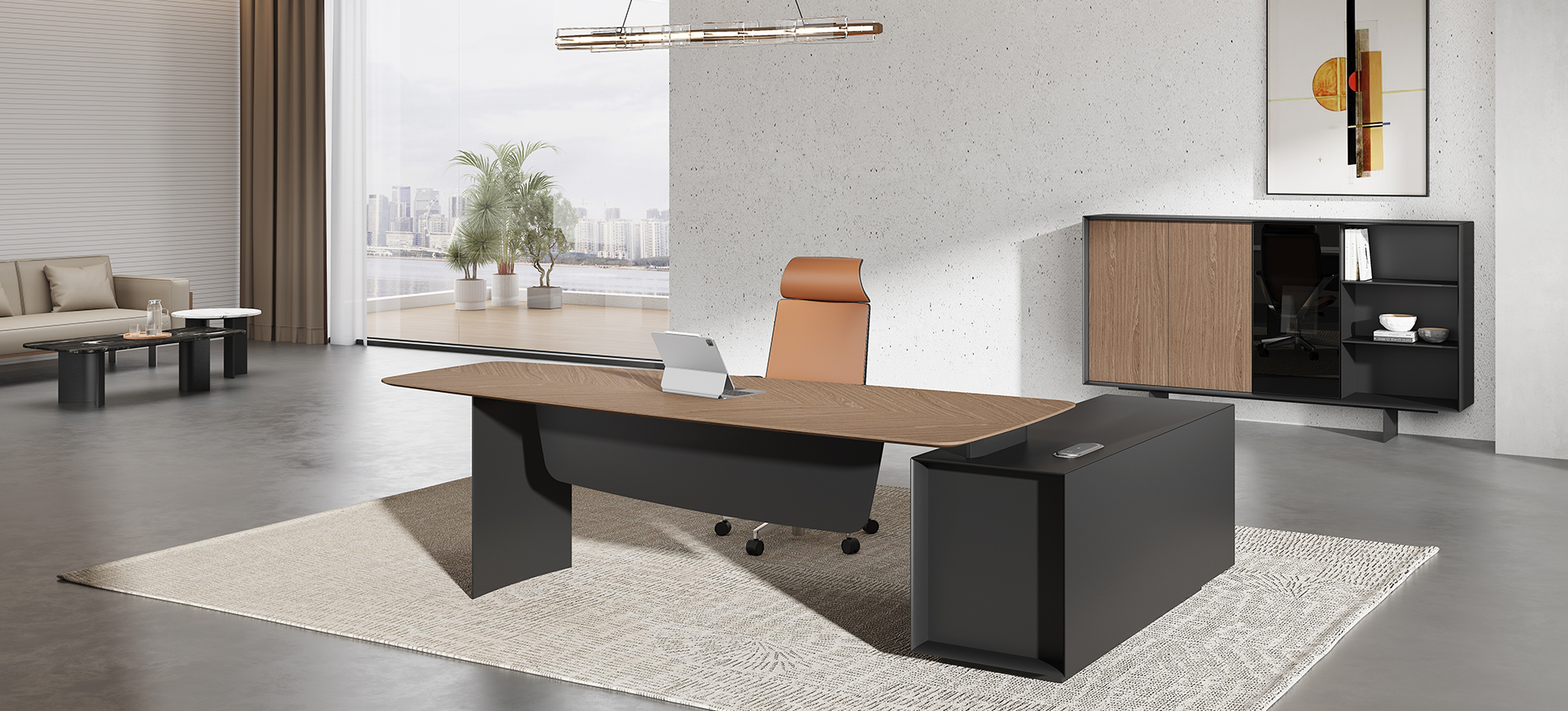
An Italian-style executive desk with clean contemporary lines brings a refined contemporary worktop to manager offices and director suites, using straight detailing, a plain neutral top, and a balanced body silhouette. The main top provides the writing and device plane, while the contemporary line treatment keeps the office looking calm and organized. This article describes the Italian-style design character, contemporary line detailing, top and body materials, office placement and guest seating, sizing against manager office proportions, finish coordination, and routine care for a contemporary executive desk.
The Italian-style contemporary executive desk
This executive desk carries an Italian-style contemporary character, planned for manager offices, director rooms, and modern executive interiors that favor a composed, refined outline. The main top forms the writing and device plane, and the body and leg elements follow clean straight lines without ornate trim or curved decoration. The plain silhouette balances a work surface with a neutral appearance that adapts to both wood-paneled and contemporary office settings. The piece supports focused management work and short in-office discussions.
The contemporary desk pairs a functional work surface with a calm visual outline. The active top holds the laptop, documents, and active materials, while the body frames the writing zone without extra decoration. Sizing, body layout, and chair clearance are checked against the clear office dimensions. The descriptions here focus on the physical desk, its contemporary line treatment, and how it fits a manager office, without service arrangements, commercial terms, or provider background.
Contemporary line detailing
Clean contemporary lines define the desk's silhouette. The top edge runs in a straight profile along the length, the body front follows a plain panel line, and legs or side panels sit at right angles to the top rather than using curved, turned, or heavily decorated elements. The restrained detailing suits modern interiors with square architectural details, plain wall panels, and linear lighting. Keeping trim, pulls, and leg members to simple flat shapes helps the desk read as one consistent contemporary piece rather than a collection of separate details.
The straight profile also affects how the desk sits in the room. A linear body aligns with the office walls and window lines, and the plain front presents an orderly face toward the guest area. Where a return or side cabinet is paired, its edges follow the same straight profile so the extended workstation reads as one group. The lack of ornate detailing keeps the management office looking calm and composed, consistent with a contemporary executive interior.
Desk top and body materials
The desk top can use wood-look panel, stone-look sintered surface, or glass, each carrying its own surface character suited to the contemporary outline. Wood-look tops bring a warm neutral stain that works with paneled walls, stone-look surfaces provide an even plane in gray, white, or beige, and glass tops bring lightness to a bright office. Matte and satin finishes keep reflection low on laptop screens under overhead light, and the edge treatment follows a straight profile to match the linear body. Natural stone variation or wood grain means each top shows its own detail rather than an identical repeat.
The body and drawer fronts use matching finishes, so the desk reads as one coordinated piece. Plain pulls follow the contemporary straight detailing, and the body can be wood panel, powder-coated metal, or a mixed wood-and-metal combination. The surface sits flat and even across the writing and device zone, so papers, notebooks, and a laptop rest steadily side by side. The material is selected for a daily management environment where the top is written on, wiped, and rearranged through the work day.
Office placement and guest seating
The contemporary desk is placed according to the office walls, window, and entry door. A common layout puts the desk against a wall that gives the seated person a view toward the entry, with any window off to one side rather than directly behind the screen. Plain wall finishes or simple framed decor behind the desk complement the straight body, so the desk's linear lines echo the wall treatment nearby. Guest chairs sit in front of the main desk, outside the work zone, in a plain contemporary style that matches the desk's neutral palette.
Manager offices often combine focused work with short meetings, so the desk and guest area should support both. The task chair pairs with the desk in height and scale, and space behind the desk lets it pull out without hitting a side cabinet. Any side credenza, low bookcase, or sofa occupies a free wall outside the desk footprint, storing bulk files and reference materials. Sockets and cable points near the chosen wall are noted before the desk position is finalized, and lighting spreads evenly across the contemporary top.
Sizing for the manager office
Sizing the executive desk starts with the clear office dimensions. Measure the usable floor space, reserve room for the task chair to pull out and push back, and leave walking space to the door and any side storage. Door widths and corridor turns are checked against the desk sections before production, since the top and body must travel to the final room. The desk height matches the task chair, and the top depth leaves room for writing, a screen, and documents. A broad top suits a spacious manager office, while a streamlined outline fits a smaller room with more open floor.
Proportion balances work surface against circulation. The top length follows the wall it sits against, and any return or side cabinet length follows adjacent free space. Drawer pedestals and the body add depth to one or both sides, so the overall footprint is counted together with the chair clearance. When length, depth, body layout, chair clearance, and access route are settled against the actual room, the contemporary desk fits the manager office without crowding the guest area.
Finish coordination and routine care
Finish selection ties the desk to the rest of the office. The body wood or metal tone matches nearby credenzas and bookshelves, the pulls repeat door frames and chair hardware, and the top tone works with paneling, carpet, and guest upholstery. Keeping the palette limited helps the contemporary office read as a considered interior, with the straight-lined body complementing the room's architectural lines. Plain hardware and trim stay consistent with the established desk style.
Routine care follows the chosen top and body materials. The top is wiped with a soft cloth and a cleaner suited to its finish, and spills are attended to promptly. Body fronts and legs are dusted regularly, drawer runners are kept free of trapped paper or dust, and adjustable feet are checked to keep the top level on carpet. Abrasive scrubbers are kept away from the top finish, and items on the top are lifted rather than dragged. Between tasks, loose papers and devices are cleared to leave the writing surface ready for the next work session.
Design details and hardware finish
The contemporary detailing on the executive desk stays restrained across the top, body, and hardware. Pulls are plain and flat, placed along the drawer and cabinet fronts without decorative curves, and any edge trim follows the straight profile of the body. The hardware finish can match the door frames and chair legs in the room, whether a black powder coat, brushed metal tone, or a neutral painted finish. Keeping hardware consistent with the rest of the office helps the desk read as part of a coordinated interior rather than a separate accent piece.
Small details such as the modesty panel, the edge of the top, and the junction between body and leg follow the same contemporary line. A plain panel behind the writing zone hides cables while keeping a flat face toward the guest area, and the top edge runs in a straight profile along the length. The body finish, whether wood panel, metal, or mixed wood-and-metal, repeats across the drawer fronts and sides so the desk reads as one consistent piece. No ornate carving or turned element is used, which keeps the Italian-style contemporary character calm and aligned with modern office interiors.
Pairing with guest seating and side furniture
The contemporary desk pairs with guest seating that shares its neutral palette. Plain fabric chairs, mesh-back guest chairs, or leather-look seats in gray, beige, or dark tones sit in front of the main desk outside the work zone, and their frame hardware can echo the desk leg finish. The task chair used by the seated person matches the desk in height and scale, with an outline that fits the contemporary body. Any side credenza, low bookcase, or sofa on a free wall follows the same quiet finish range, so the manager office reads as one planned space.
Side furniture should not compete with the desk's straight outline. Bookshelves and credenzas use plain panel doors and simple handles that match the desk body, and wall decor behind the desk stays plain or restrained so the linear lines of the body echo the wall treatment. The guest area leaves enough floor for visitors to pull out chairs and step toward the door without squeezing past the desk or return. When the desk, guest seating, and side storage share a consistent finish and line style, the manager office supports both focused work and short discussions.
Desk height and chair coordination
The desk height is set to align with the executive or task chair so the seated user can write and use devices comfortably. Standard desk surfaces sit at a working height that pairs with a matching task chair, and the chair seat adjusts to bring the forearms level with the writing plane. The top depth leaves room for writing and a screen without forcing the seated person to reach far, and the leg or pedestal placement leaves knee room under the main work zone. Chair arms should clear the desk edge so the chair can push in without catching the body.
Chair scale also affects how the desk reads in the office. A task chair with a plain contemporary outline echoes the desk's straight lines, while a traditional chair would introduce a different detail style against the linear body. The chair frame hardware can repeat the desk pull finish, and upholstery in a neutral gray, black, or fabric tone works with the contemporary top. Space behind the chair lets it pull out and push back without hitting a side cabinet or the return. When desk height, chair height, knee room, and pull-out space are settled together, the workstation fits the manager office for regular daily use.
FAQ
Q: What is an Italian-style executive desk with contemporary lines?
A: It is a refined modern management desk with straight top edges, plain body panels, and leg elements, using a neutral top surface and a calm organized outline for a manager office.
Q: Which top materials suit the contemporary design?
A: Wood-look panel, stone-look sintered surface, and glass are common, in matte or satin finishes that keep screen reflection low under office lighting.
Q: Which body and leg styles are available?
A: Straight legs, panel sides, or a linear pedestal base carry the top, with plain pulls and a matching wood, metal, or mixed wood-and-metal body finish.
Q: How should the desk be sized for a manager office?
A: Measure clear floor space, reserve chair pull-out and walking room, check door and corridor access, match the height to the task chair, and set the top depth against the writing and device workflow.
Q: How is a contemporary executive desk maintained?
A: Wipe the top with a cleaner suited to its finish, dust the body and legs, keep drawer runners clear, check feet for level, keep abrasive pads away, and lift items rather than dragging them across the top.