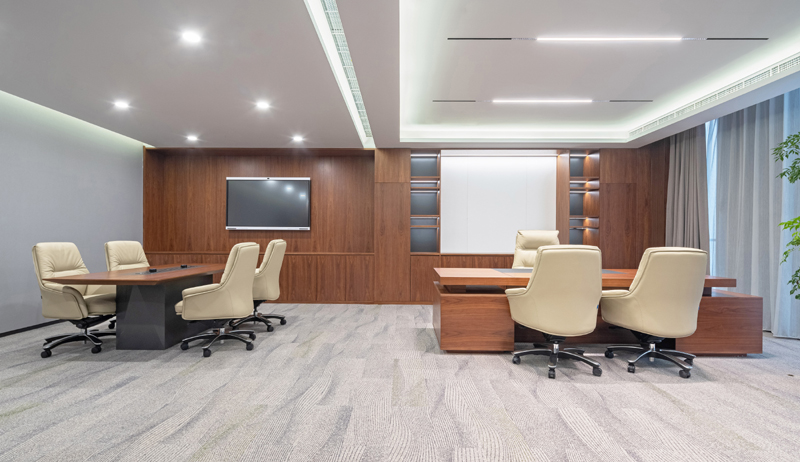

A boat shaped large conference table widens along the middle and tapers toward both ends, suited to formal boardrooms and large meeting rooms where long sightlines matter. The broad center holds seating along the long sides, while the tapered ends narrow the perimeter near the head and tail positions. This article describes the boat outline, top material options, base and support structure, boardroom seating and sightlines, sizing for large rooms, finish coordination, and routine care for a large tapered conference table.
The boat shaped large table
A boat shaped conference table follows a long outline that is widest through the middle and tapers inward toward both ends. This large-format table is planned for boardrooms, executive meeting suites, and spacious conference rooms that host formal sessions and larger working groups. The widened center gives side seats room for notes and devices, while the tapered ends soften the perimeter near the head and tail positions and leave open access at both ends. The outline directs sightlines toward the front or center of the meeting space.
The large table sets the central structure of a formal room, with guest chairs lining the tapered long sides and side storage kept on free walls. Dimensions, base spacing, and walk-around space are checked against the clear boardroom area and expected seat count. The descriptions here focus on the physical table, its outline and structure, and how it fits a large room, without service arrangements, commercial terms, or provider background.
Boat outline and proportions
The boat shape differs from a straight rectangle through its side profile: the long sides curve or angle outward to the widest point at mid-table, then narrow toward the two ends. This outline can provide balanced sightlines down the length, since side seats near the center sit slightly angled toward the head position. The tapered ends reduce the corner mass that a broad rectangle would carry at the head and tail, leaving cleaner access routes into and out of the seating group. The overall length and width are set against the room proportions rather than a fixed capacity alone.
The center width determines how much writing and device space each side place has, while the end width suits one or two head positions. The curve or angle of the sides affects how chairs align around the perimeter, and the edge treatment follows the boat outline all around. A boat shape works in rooms that prefer a formal, composed outline; rectangular and oval alternatives are available where a straight side profile fits the interior better.
Top material options
The large boat top can be produced in sintered stone, marble-look stone, wood-look panel, or glass, each carrying its own surface character. Stone tops offer a flat even plane in neutral gray, white, or beige tones, with matte or honed finishes that limit reflection under boardroom lighting. Wood-look panel tops bring a warmer tone that works with traditional interiors, and glass tops bring lightness to a bright formal room. Natural stone variation means veining and speckle differ from top to top, rather than repeating as an identical printed image.
The top edge frames the boat outline and affects how the surface reads under overhead lighting. A straight square edge gives a crisp formal line, an eased edge softens the perimeter along the seating sides, and a beveled edge adds a subtle angled profile where the top meets the base. The edge thickness is visible along the whole tapered outline, so it should balance the visual weight of the chosen base. The top material is selected against the boardroom's wall panels, carpet, and nearby cabinetry.
Base and support structure
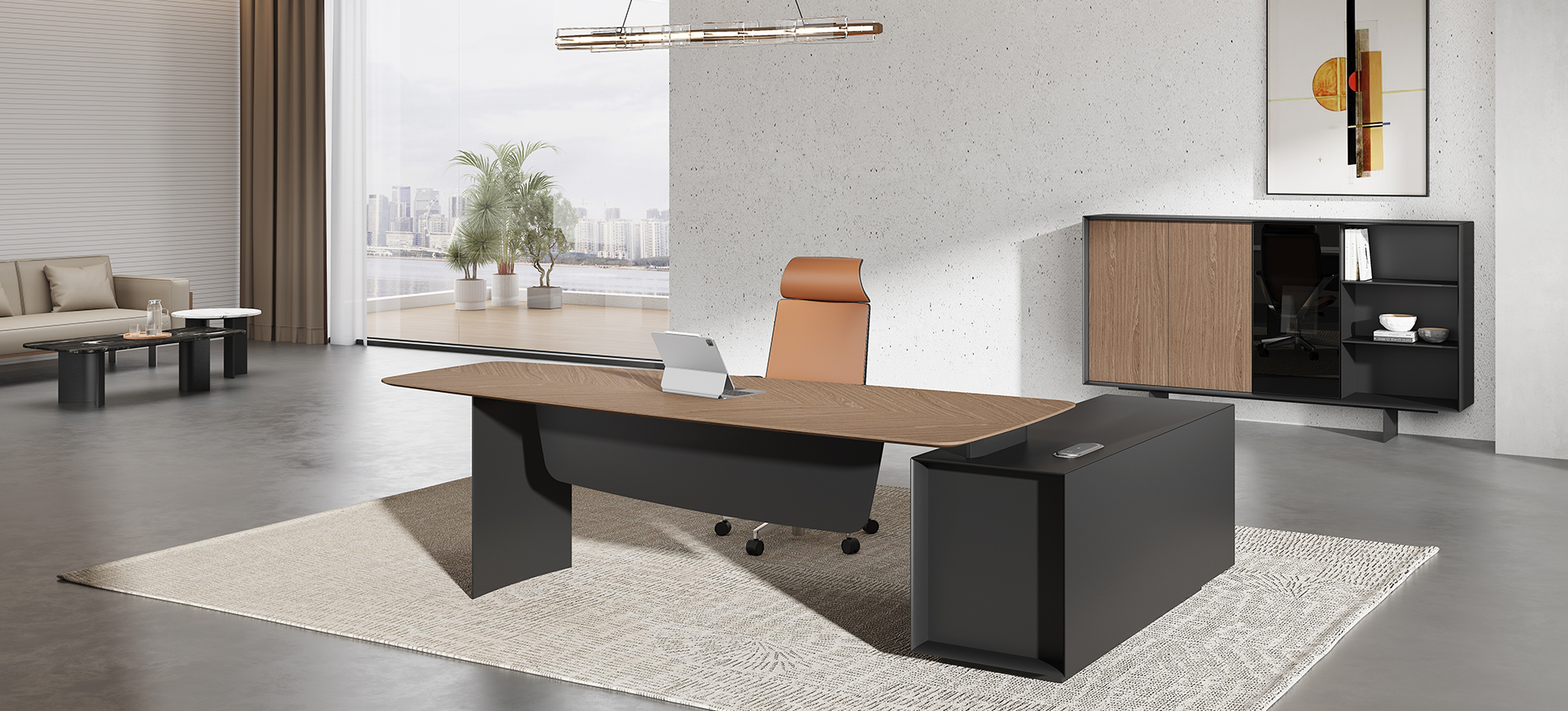
A large boat table needs a support base that carries the wide center and the tapered ends without sagging across the span. Common base styles include straight metal legs spaced along the length, panel legs, trestle supports at the ends, or a steel-and-wood frame apron under the top. The base can be powder-coated metal in black, gray, or a neutral tone, or a wood-panel base that repeats nearby credenza and bookshelf finishes. Adjustable feet help the base sit level on carpet, keeping the large top steady during use.
Base planning focuses on steady support and open knee room. Leg spacing should preserve seating positions along the long sides and chair pull-out at the tapered ends, and the support should not project far beyond the top edge. Where laptops, displays, and video devices are used, grommets in the top and channels under the base keep cables gathered toward the nearest power point. The base should visually balance the broad top, so the large table reads steady rather than top-heavy in the formal room.
Boardroom seating and sightlines
Seating around a boat shaped table follows the tapered sides. Chairs line the long sides in ordered places, each angled slightly along the outline, while one or two head positions sit at each tapered end. The widened center gives side seats elbow and writing space, and the tapered ends keep the head and tail areas open for access. Keeping the row spacing even helps sightlines down the table stay clear, so attendees can see the front presentation surface and each other across the group. Space behind the seating allows people to stand or step out during a formal discussion.
Formal boardrooms coordinate the table with guest seating and side storage as one planned group. Guest chairs use fabric, wood, or leather-look finishes that echo the table's base material, and their height aligns with the tabletop. Side storage stays on free walls outside the seating perimeter, holding supplies, documents, and meeting equipment. Lighting spreads evenly across the large top, with glare considered against the chosen finish. When seating, sightlines, and storage are planned around the boat outline, the boardroom keeps a composed formal layout.
Sizing, finish coordination, and care
Sizing the large boat table starts with the clear boardroom dimensions. Measure usable length and width, reserve chair and aisle space along each side, and leave open access at both tapered ends. Door widths, corridor turns, and any elevator or stair route are checked before production, since the large top sections must travel to the final room. The top depth sets the work space per seat, and the height matches the planned guest seating. The boat outline should follow the room proportions so the perimeter walkway stays open even with the widest center section.
Finish selection ties the table to the formal interior. The base metal or wood tone matches nearby door frames, chair legs, and side cabinetry, while the top tone works with paneling, carpet, and guest upholstery. Keeping the palette limited helps the boardroom read as a considered space. Routine care follows the chosen top material: stone or marble-look surfaces are wiped with a stone-safe cleaner and soft cloth, wood-look panel tops are dusted and wiped according to their finish, and the base is dusted regularly with feet checked for level.
Matching seating rows to the boat outline
A boat shaped table lends itself to ordered seating along the curved or angled long sides, with places aligned to follow the outline toward the tapered ends. Each side place leaves room for a notebook, a device, and elbow space, so the side length is counted by the number of places rather than by overall length alone. The tapered ends hold one or two head positions each, with space to enter and leave without crossing the group. Keeping the row spacing even helps sightlines down the table stay clear for every attendee.
Chair choice around the boat follows the room's formality. Fabric or mesh guest chairs line the sides for internal sessions, while a more uniform seating style suits rooms that host outside visits. Chairs align with the angled outline, and space behind the last row allows attendees to stand or step out during a discussion. When seating rows, place spacing, and aisle clearance are mapped to the boat shape, the large table supports an orderly boardroom layout.
Coordinating base and side storage finishes
The base of a large boat table coordinates with the room's other furniture so the central table reads as part of the interior. Metal frame members match door frames, window frames, and chair legs, while wood apron accents repeat nearby credenza and bookshelf tones. Side storage along a free wall uses the same palette, so the boardroom reads as one set rather than a large table placed among unrelated pieces. Keeping the finish references consistent across base, seating, and cabinetry helps the broad room stay composed.
Hardware details on the base and storage should echo one another: pulls, leg finishes, and edge profiles follow a single plain style suited to the office. The top tone sits between these finishes, working with paneling and carpet. When the base and nearby storage are planned together from the room's actual finishes, the large boat table fits the conference space as a coordinated central piece.
Top edge and perimeter detailing
The large boat top carries an edge profile that frames the broad surface and matches the room's furniture style. Straight square edges give a crisp formal line, eased edges soften the perimeter along the seating sides, and beveled edges add a subtle angled profile where the top meets the base. The edge thickness is visible along the full tapered outline, so it should balance the visual weight of the chosen base. The perimeter should sit flush with the frame beneath, without an overhang that catches chair movement or hands reaching across the table.
Corner treatment at the two tapered ends can be square or rounded, depending on the room's traffic pattern and formality. Square corners suit a structured boardroom layout, while rounded corners soften the outline in rooms with frequent foot traffic around the perimeter. The edge is wiped along with the main surface during routine care, and chairs are moved with clearance so legs do not knock the perimeter. When edge profile, overhang, and corners are planned with the base structure, the large boat top presents a steady finished outline in the conference room.
FAQ
Q: What is a boat shaped large conference table?
A: It is a long large-format table that widens through the middle and tapers toward both ends, planned for boardrooms and spacious conference rooms with formal or large-group sessions.
Q: How does the boat outline affect sightlines?
A: The widened center gives side seats elbow and writing space, and the angled sides keep side positions facing toward the head or center; the tapered ends keep access open at both ends.
Q: Which top materials are offered for a large boat table?
A: Sintered stone, marble-look stone, wood-look panel, and glass are common top options, each with its own surface finish and tone to match the boardroom interior.
Q: How is a large boardroom table sized?
A: Measure clear room area, reserve chair and aisle space on each side, check door, corridor, and access route widths, match the height to guest seating, and set the center depth for writing and device space.
Q: How is the table cared for by top material?
A: Stone or marble-look tops are wiped with a stone-safe cleaner and soft cloth, wood-look panel tops are dusted and wiped per their finish, the base is dusted, and feet are checked for level; abrasive pads are kept away from the surface.